
Rainbow and the Escaped Girl
The Painted BirdThis thread follows a Jewish girl’s brief escape from a transport train, the villagers’ decision to surrender her, and Rainbow’s assault, which ends in her death and leaves The boy haunted by the encounter.
increasing Bearing strength in each event
 decreasing
Bearing strength in each eventdecreasingA Child Found by the Tracks
A Child Found by the Tracks
News from the railway
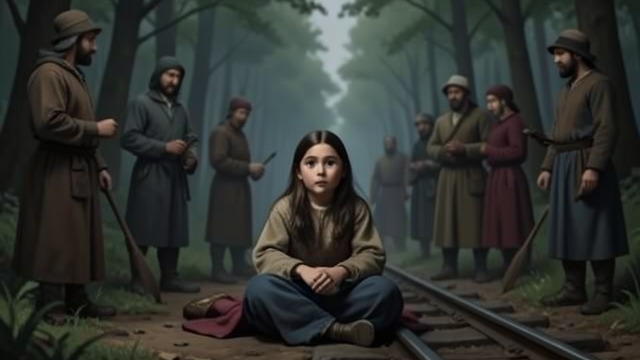
Villagers hear that a Jewish girl has been found alive near the railway after falling or escaping from a transport train. People leave their mushroom gathering to see her, turning her discovery into a public spectacle rather than an immediate rescue.
The girl is injured and frightened. Her black eyes and unfamiliar language make her an object of suspicion to people already accustomed to watching trains carrying Jews and Roma toward the camps.
A decision to surrender her
The village headman and elders confer with Rainbow, who found the girl. They decide she will be sent to the German post the following day, following what they describe as official regulations. Their decision places the girl in danger while allowing the village to frame its response as compliance.
The crowd gradually disperses, although some people remain to watch and make jokes. The girl is left exposed among adults whose curiosity and prejudice outweigh any effort to secure her safety.
A Night in Rainbow’s Barn
A Night in Rainbow’s Barn
A change of custody
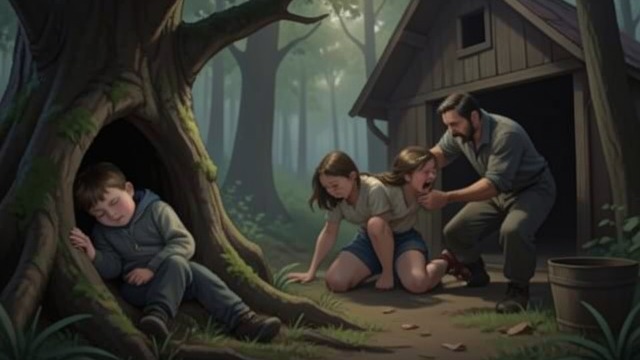
Rainbow takes the girl to his hut instead of leaving her with the village headman. This act appears to interrupt the planned handover, but it does not provide real protection. The girl remains dependent on a man who controls where she is kept and who can reach her.
The boy, sleeping nearby, hears noises from the barn and looks through a knothole. From this limited vantage point he witnesses Rainbow stripping and assaulting the injured girl as she cries and tries to resist.
The violence deepens
The girl’s resistance and Rainbow’s panic intensify the attack. He cannot separate himself from her, and the boy compares the situation with dogs he has seen trapped together after mating. The comparison shows how he tries to make an incomprehensible human event legible through what he has observed.
Rainbow calls for help. Men arrive and summon an old woman who knows how to separate the pair. The boy cannot see what she does, but hears the girl’s final scream before the barn falls silent.
A Body Returned to the Tracks
A Body Returned to the Tracks
The concealed aftermath
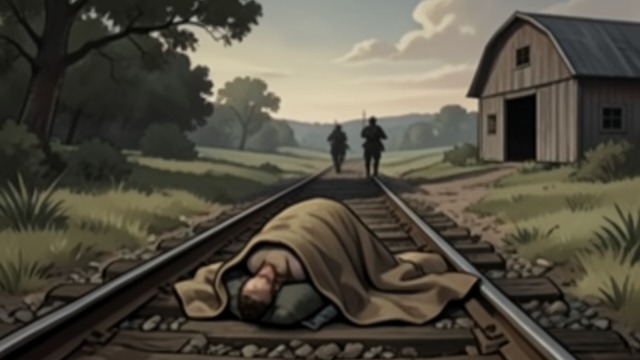
At dawn, The boy peers through the knothole again and sees a human shape lying beneath a horse blanket. He later learns that Rainbow has taken the girl’s body back to the railway track, where a patrol is expected to pass.
The journey from the rails to Rainbow’s barn and back to the rails forms a grim circle. The girl escaped the transport only to be concealed, assaulted, and returned to the same machinery of danger from which she had fallen.
A story made acceptable
For weeks, Rainbow tells villagers that the girl had trapped him and would not let go. His version converts his assault into a story about an inexplicable bodily mishap, while the girl’s suffering and death disappear from the public account.
The villagers discuss the episode as gossip, and the planned delivery to the German post is displaced by the fact that Rainbow has already disposed of the body. His self-exculpation becomes part of the community’s ordinary talk.
The Boy’s Nightmares
The Boy’s Nightmares
Violence returning in dreams
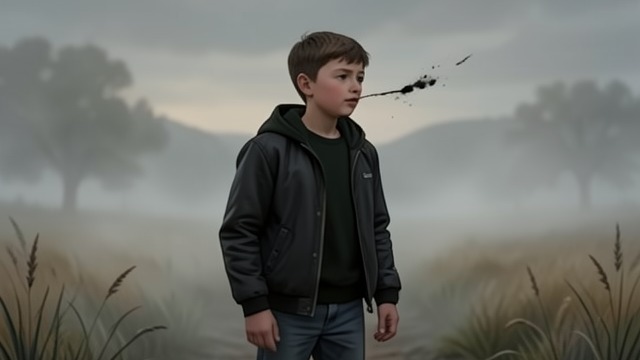
After the girl’s death, The boy dreams of cries from the barn and imagines an icy hand touching him. Strands of black hair smelling of gasoline seem to brush his face, joining the assault he witnessed to the recurring image of burned bodies and railway transports.
The dreams make the event persist beyond the night itself. The girl is no longer present in the village, but The boy experiences her imagined return as an accusation that cannot be put away by the adults’ casual conversation.
A landscape of reminders
At dawn, The boy watches mists above the fields and becomes frightened when a tiny shred of soot drifts toward him. He imagines the soot looking him in the eye before rising into the sky.
This fragment links the girl’s fate to the earlier bodies and ashes associated with the trains. The boy cannot give her a public voice or change what happened, but his fear preserves the violence that Rainbow’s story attempts to erase.
Complicity and Memory
Complicity and Memory
A community’s failed refuge
The girl’s arrival briefly creates a choice: shelter her, surrender her, or exploit her vulnerability. The villagers decide on handover, while Rainbow takes her into his care and then assaults her. None of the adults provides a refuge that protects her life.
The boy witnesses the contrast between their stated concern with rules and the actual consequences of their actions. The girl’s death is not an accidental interruption of village life; it grows from decisions made by people who have power over her.
A memory without repair
The public account centers Rainbow’s claim that the girl trapped him, while The boy’s private memory centers her cries and disappearance. The two versions coexist, but only one is repeated openly in the village.
The boy’s nightmares preserve what the community refuses to confront. They cannot restore the girl or undo the intended delivery to the Germans, but they prevent her final experience from becoming only Rainbow’s self-serving anecdote.
During mushroom season, after The boy begins living with a new farmer
The night before the girl is to be sent to the German post
At dawn after the assault in Rainbow’s barn
During the weeks after the girl’s death
Later in the same autumn, as the village continues gathering mushrooms
